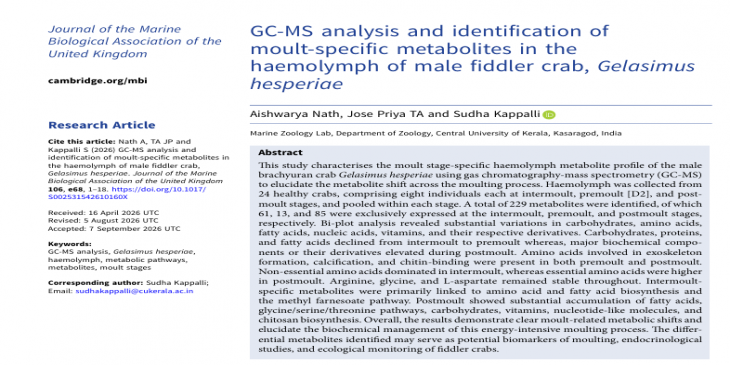
GC-MS analysis and identification of moult-specific metabolites in the haemolymph of male fiddler crab, Gelasimus hesperiae
Abstract
This study characterises the moult stage-specific haemolymph metabolite profile of the male brachyuran crab Gelasimus hesperiae using gas chromatography-mass spectrometry (GC-MS) to elucidate the metabolite shift across the moulting process. Haemolymph was collected from 24 healthy crabs, comprising eight individuals each at intermoult, premoult [D2], and postmoult stages, and pooled within each stage. A total of 229 metabolites were identified, of which 61, 13, and 85 were exclusively expressed at the intermoult, premoult, and postmoult stages, respectively. Bi-plot analysis revealed substantial variations in carbohydrates, amino acids, fatty acids, nucleic acids, vitamins, and their respective derivatives. Carbohydrates, proteins, and fatty acids declined from intermoult to premoult whereas, major biochemical components or their derivatives e...